

What Happens to Your Yard During a Fiberglass Pool Installation?
One of the most common questions we get from customers is what realistically happens to the backyard during a pool installation. It’s a completely fair question. Most of us have never put in a pool before.
With any construction project, we expect some damage, but how much? Do I need to hire a landscaper, or is this something I can handle myself?
So today I want to dig into what a first-time pool buyer, or really any pool buyer, can realistically expect their yard to look like during a pool project.
We’ve heard horror stories in the industry, about families who didn’t expect any landscape damage until it was already done.
We want to help anyone avoid that however we can. A pool is already a significant investment, so it’s important to understand every variable before you go into the project. If you prefer video, here is a quick one we made that talks about the subject!
Plan on restoring anywhere the equipment goes
Let’s start with a realistic expectation. Any part of your yard that has dump trucks, cranes, excavators, or really any equipment driving over it, you’ll want to plan on fully restoring. That could be reseeding, laying sod, or whatever method you prefer. Either way, plan on that area needing to be redone!
Can you prevent the damage?
We get asked this a lot, and unfortunately there’s no real way to prevent the damage. We always lay down construction pads when we’re working on a customer’s property, but the yard still has to be restored afterward. The pads minimize the damage slightly, but more than anything, they keep the equipment from getting stuck. With how heavy this equipment is, there’s just no way to avoid tearing up the ground it drives over.
What we can do, however, is limit how much of the yard gets damaged. The main way we do this, is by keeping it all in one place. Our crews will pick a single access point with you, so the damage stays as consolidated as possible.
That said, there’s only so tight we can keep it. The machines and dump trucks all have to work near each other, and they need room to do that safely. We also have to grade the yard, and smoothing out the dirt takes room too. Ultimately, that means the damage covers a larger area than most people expect!
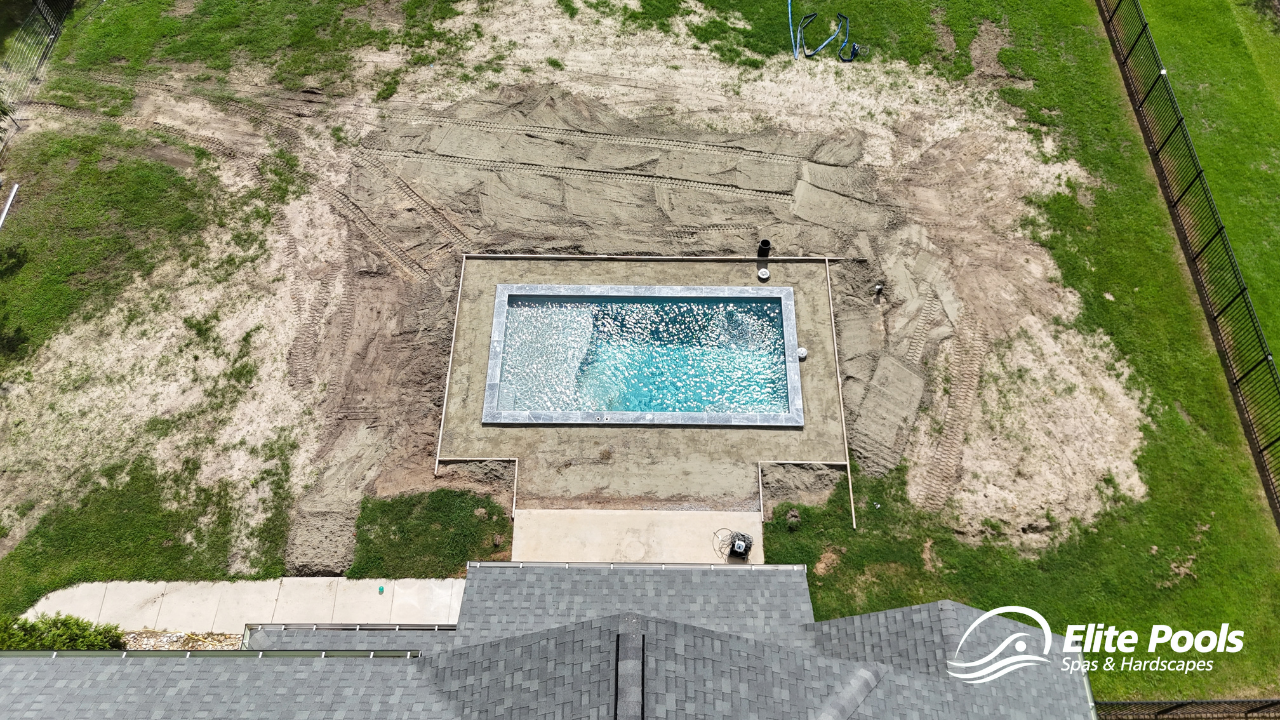
How weather affects your yard
Weather is a big factor in how much damage your yard takes. In the colder months, the ground stays wet longer after a rain, and cooler nighttime temperatures slow down how fast it dries. So depending on the time of year, your yard may be more or less likely to get torn up.
If we’re installing a pool in August, the ground usually dries out the day after a heavy rain, or the day after that. Those yards will likely see a little less damage than a yard we’re installing in January, where the ground will take much longer to dry.
When we’re working with a client, we’re usually the first to recommend waiting a day or two after a heavy rain so the ground can dry out. In the winter, that gets harder. Waiting for the ground to dry could mean waiting an entire week, and more than likely we’ll get another rain before then.
Most customers are so excited to get their pool in that they tell us to just go ahead and install anyway. In the grand scheme of the project, the difference in restoration cost between a January install and an August install is usually negligible, so a lot of customers just have us proceed regardless.
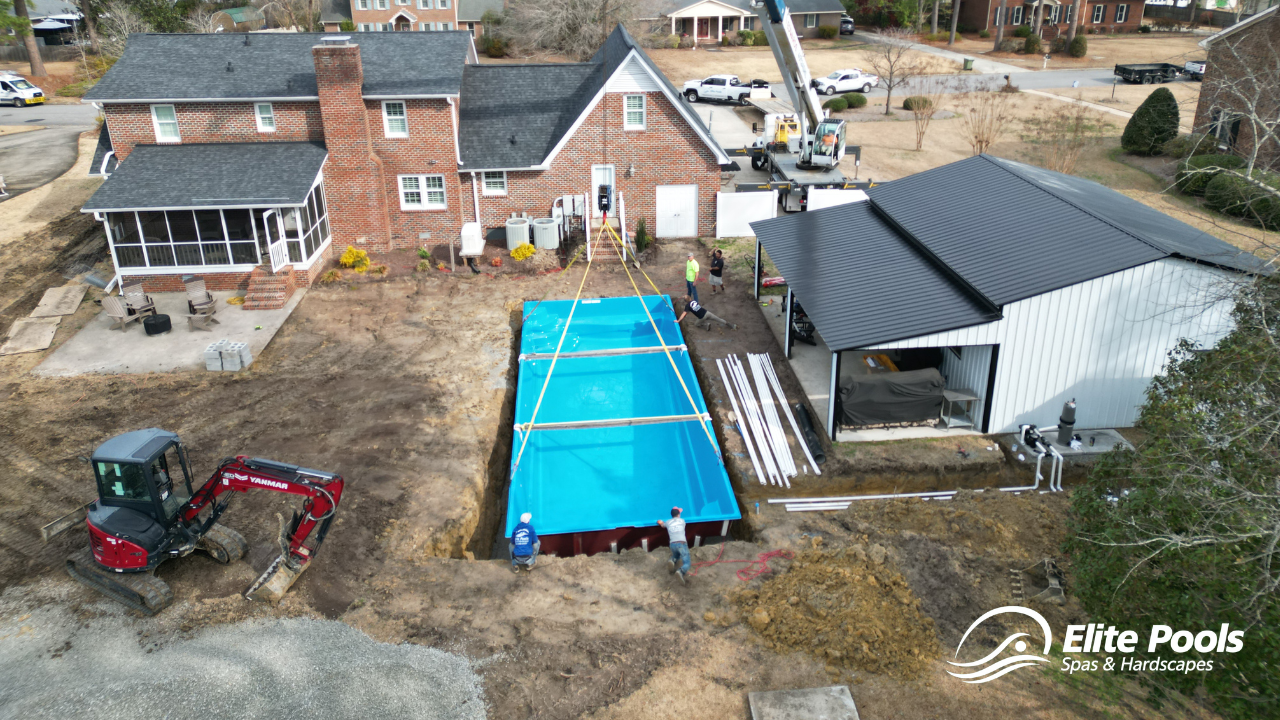
Should you wait for a drier time of year?
Personally, I’m going to say no. Sort of a left field quote...but in my years, I have heard a lot of farmers say “if you wait for perfect weather, you’ll never plant anything.” The same goes for pools.
A lot of customers fall into the idea of perfectly timing their project, and unfortunately things just don’t work that way. Say we mutually decide to push your installation back a few weeks to wait for the perfect window. Then the pool goes in the ground, we get more rain than expected, and the installation gets set back again. Before you know it, your perfectly timed installation isn’t so perfect anymore.
That’s why I always recommend getting your pool installed as soon as you can. Waiting on perfect conditions usually just ends up delaying your project. And if something does set the installation back, now you’re wishing you had started sooner.
As I always say, the grand scheme of the project is what matters most, and restoration costs from one time of year to another usually aren’t that different. If you hold off on purpose for a March or April installation and some unusual weather hits, you’re on a very fine line of cutting into your swim season.
The bottom line
My recommendation to anyone looking into a pool project is to understand that this level of damage to your backyard is just part of getting a pool installed. Ultimately, what matters most is the bigger picture of the project.
Always remind yourself that you likely won’t be thinking about your yard being torn up two, four, or five years down the road. Whether your yard is a little more torn up in January than it would have been in July just isn’t something you’re likely going to think about later.
And if you’re in the middle of an installation right now, keep in mind that it has to get worse before it gets better. The finished project is what matters most!
Have a question about your installation and what it would look like in your yard? Request a consult or call us at 252-689-6557.